
A castle in the clouds, a cloister in Marsala, a tower above the sea
When a Sicilian comune authorises places for legal weddings, it tends to reach for the finest buildings it has. Castles, cloisters, watchtowers, piazzas. They are booked through the comune (the local council) rather than through any venue company, most are missing from the wedding directories entirely, and the fees are set by each town and are mostly modest. Here are five of those places, across four towns in the west and south-east of the island.
Trapani
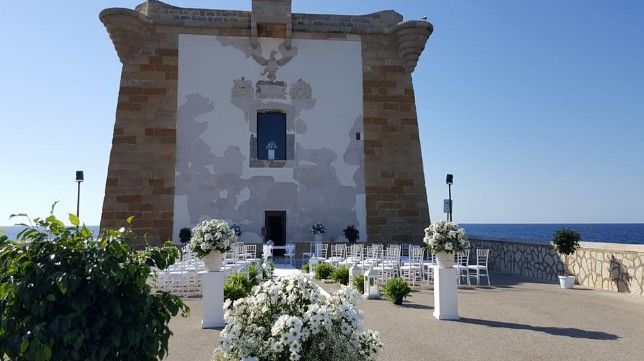
An old port town with ferries out to Favignana, and a real choice of its own. Palazzo D’Alì is the nineteenth-century town hall on the main piazza. And at the very tip of the sea wall stands Torre di Ligny, a seventeenth-century watchtower with water on three sides, which needs a specific extra authorisation that I arrange. It is a gloriously exposed spot, and the registry office told me of a summer ceremony there spoiled by wind, so it is one to plan around the weather. Trapani has its own airport twenty minutes away, with Palermo about an hour and a quarter.
Erice
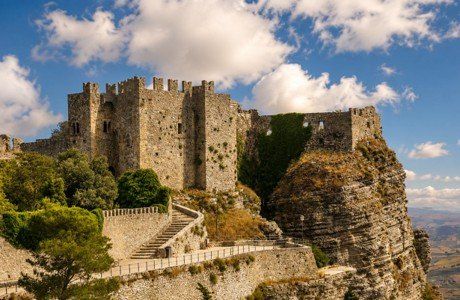
Up the mountain above Trapani, a walled medieval town of grey stone lanes, views over the salt pans to the Egadi Islands, and often literally above the clouds. The venue everyone wants is the Castello di Venere, the Norman castle built over the ancient temple of Venus. It doubles as an exhibitions venue, so its calendar is committed months ahead and summer dates are close to impossible. The cable car up from Trapani is part of the day.
Marsala
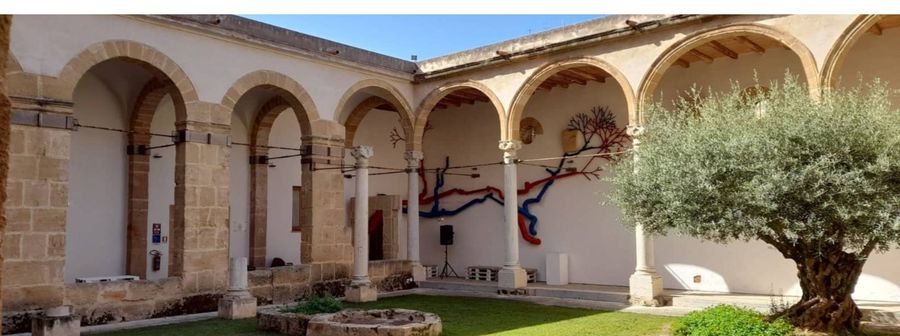
Marsala holds its civil ceremonies at the beautiful ex Convento del Carmine, a fourteenth-century convent whose arcaded cloister now houses the town’s picture gallery. The town is twenty-five minutes from Trapani airport, and the Stagnone lagoon with its windmills and salt pans is just up the coast.
Ortigia
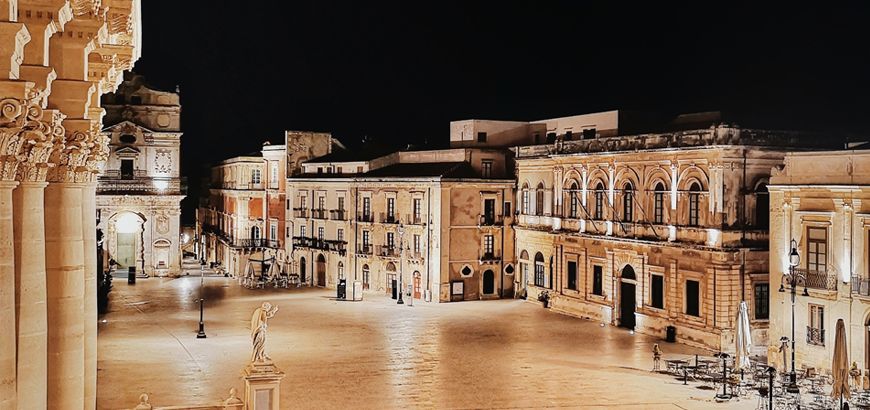
Ortigia is Siracusa’s old heart, a small island of baroque lanes with sea on every side. Its cathedral square may be the loveliest in Italy, and the Duomo itself is built around the columns of a Greek temple. The comune marries couples in its own buildings: palazzo halls giving onto Piazza Duomo, a frescoed former convent church, and arcaded courtyards for open-air ceremonies from April to October. Each of Siracusa’s venues, with its fees and dates, is in our guide to marrying in Ortigia.
What I look after
Each comune also sets its own calendar, with blocked dates and seasonal outdoor sites, so I confirm everything with the comune, in Italian and in writing, before you set your heart on a date.
Dealing with the comuni in Italian is the side I handle personally: confirming exactly what your chosen comune requires, arranging and checking the translations, keeping the paperwork moving in the right order, and acting as your interpreter at the declaration before the registrar and again on the wedding day. Where you want it, I find the venue for the celebration and bring the local suppliers together as well. What each service covers is here.
What each town charges, from nothing at all up to €1,600, is on the fee table, along with the full run of authorised venues, Taormina’s palazzo and the beach case comunali among them, and how the paperwork works.
If one of these sounds like your kind of day, message me on WhatsApp and tell me what you are picturing. I read and answer every message myself.